Westinghouse Renews IPO Bid Amid AI Power Crunch, With U.S. Government Targeting $30 Billion Valuation — BigGo Finance
Westinghouse Renews IPO Bid Amid AI Power Crunch, With U.S. Government Targeting $30 Billion Valuation
U.S. nuclear power plant company Westinghouse is pursuing an initial public offering (IPO) in a bid for a comeback, nine years after suffering its worst crisis — a 2017 bankruptcy. The surge in electricity demand driven by the proliferation of artificial intelligence (AI) data centers, along with the Donald Trump administration's nuclear expansion policies, are cited as the key drivers behind the IPO push. The Wall Street Journal reported on August 31 (local time) that Westinghouse filed confidentially for an IPO in July. The listing timeline and offering size have not yet been finalized. Market estimates project Westinghouse's enterprise value at between $15 billion (approximately 20.6 trillion won) and $20 billion (approximately 27.4 trillion won). David Nicholas, CEO of X Funds, which manages a nuclear energy exchange-traded fund (ETF), said, "If investors assign value to the AP1000, a valuation exceeding $20 billion is not out of the question." Founded in 1886, Westinghouse began as an electrical equipment company and went on to lead the nuclear power industry, building the world's first commercial nuclear power plant after World War II. However, competition intensified as latecomers such as South Korea and Japan gained market share, and the company ultimately filed for bankruptcy in 2017 amid construction delays and cost overruns at the Vogtle nuclear plant project in Georgia. The two Vogtle reactors were originally expected to cost $14 billion (approximately 19.2 trillion won) to build, but with construction delayed by roughly seven years, the final cost exceeded $30 billion (approximately 41.2 trillion won). Its then-parent company, Japan's Toshiba, could not absorb the losses. In 2023, Canadian private equity firm Brookfield and uranium miner Cameco acquired Westinghouse for $8 billion (approximately 11 trillion won). At the time of the acquisition, the nuclear construction business — the direct cause of the bankruptcy — was assigned no value, with only the nuclear fuel manufacturing and nuclear services segments, which generate stable cash flow, included in the valuation. The Trump administration is aiming to push Westinghouse's valuation above $30 billion. In October of last year, the administration entered into a partnership with Westinghouse shareholders and agreed to pursue $80 billion (approximately 109.8 trillion won) in domestic nuclear construction. In exchange for providing regulatory streamlining and financial support including low-interest loans, the U.S. government would secure a 20% equity stake if the company's post-listing valuation exceeds $30 billion. President Trump has set a goal of expanding U.S. nuclear generating capacity from the current roughly 100 gigawatts (GW) to 400 GW by 2050, with an interim target of breaking ground on 10 new reactors by 2030. Westinghouse's AP1000 reactor technology is considered central to this plan. Dan Sumner, CEO of Westinghouse, emphasized, "There is virtually no realistic path to achieving AI infrastructure expansion and energy security without nuclear power." Power demand from AI data centers is already emerging as a tangible constraint. Last month, New York Governor Kathy Hochul signed an executive order halting new data center construction for one year. Applications totaling 12 GW of data center capacity are pending on New York's power grid — equivalent to Portugal's peak electricity demand. The U.S. government is also working to secure business opportunities for Westinghouse abroad. The United States agreed in July to a nuclear cooperation agreement (a "123 Agreement") with Saudi Arabia, under which Westinghouse is expected to become the exclusive supplier of AP1000 reactors to the kingdom. The contract value is expected to reach several billion dollars, with some analysts projecting the economic impact of the 30-year agreement at tens of billions of dollars. However, having suffered bankruptcy during full-scale nuclear construction, Westinghouse has maintained a management principle of not bearing direct construction risk. Accordingly, the U.S. government and Westinghouse are reportedly proposing partnerships with South Korean companies that have extensive nuclear construction experience to serve as construction partners. As part of trade agreements tied to tariffs, the United States secured commitments last year for large-scale investments from South Korea and Japan. The U.S. government is also reportedly developing plans to channel a portion of those investment funds into its domestic nuclear revival.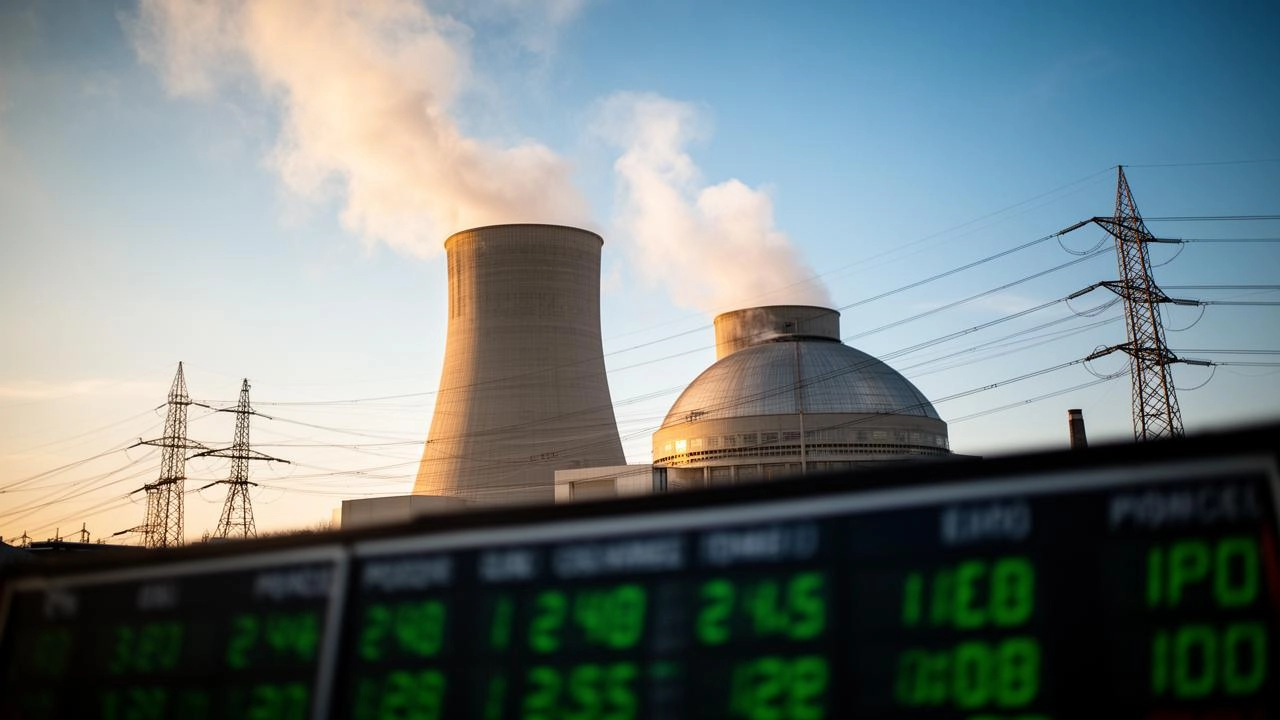
From Bankruptcy to Revival
Full-Throated Support from the Trump Administration
Overseas Order Prospects
- Log in to post comments